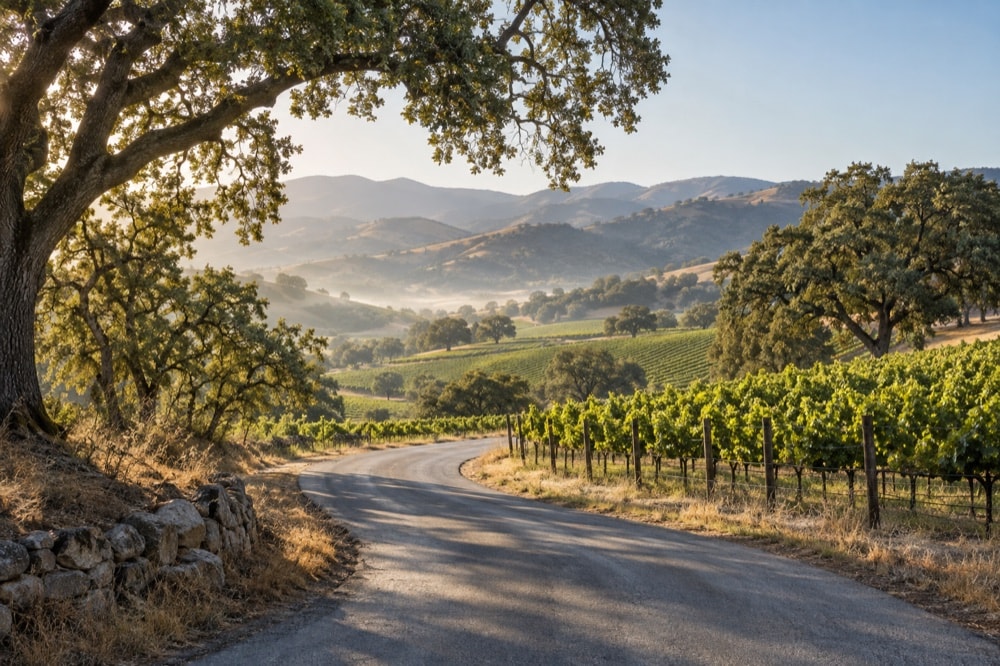
A useful Santa Ynez Valley plan begins with restraint. The six communities are close on a map, yet rural roads, parking, meals and unplanned pauses all take time. Instead of collecting destinations, decide what kind of day you want and let geography do the editing.
Choose a home base
Pick the place where the day starts and ends. Solvang suits a walkable village rhythm; Buellton is practical for US-101; Los Olivos centers a compact town-and-wine-country plan; rural lodging favors quiet but adds driving. Read the lodging patterns before choosing.
Name one main thread
Landscape, wine, food, art and history each make a complete day. One main thread keeps the itinerary coherent. A second can be a short complement: a museum after a morning walk, or a village meal after a country drive.
Group by geography
Keep neighboring stops together. Los Alamos and Buellton form a western pair. Ballard, Los Olivos and Santa Ynez make a central cluster. Solvang is a strong eastern anchor, with Mission Santa Inés close by and the road toward Lake Cachuma continuing beyond town.
Protect the return
Leave daylight for unfamiliar rural roads, choose a designated driver before wine tasting, and know how you will get back before the first stop. A generous final hour is more useful than one extra pin on a map.
Three adaptable day shapes
The village day
Begin with a morning walk, choose a museum or gallery, pause for lunch, then add one nearby community in the afternoon. This shape works well when weather is uncertain because most of the day can remain close to shelter and a parked car.
The landscape day
Start outdoors early, when temperatures and traffic may be more comfortable. Follow with a long lunch and a low-effort afternoon in one town. Check weather, route conditions and public-land rules before leaving; if the outdoor plan changes, substitute an art-and-history route rather than forcing it.
The wine-country day
Choose one geographic area, limit the number of stops and allow time between them. Appointments and access policies vary, so verify directly. Eat, hydrate and arrange a sober driver. For the valley's recognized wine geographies, begin with the wine-country overview; for pacing, use the touring guide.
Keep the plan current
Forecasts, fire conditions, road work and public access can change quickly. Check authoritative sources on the morning of the trip. Business hours and reservation practices change too; this guide intentionally avoids reproducing them. A good backup is a different kind of day, not a distant substitute that creates more driving.
Before departure, save the route, note fuel range, carry water and tell someone where a longer outdoor route goes. Then stop planning. The valley becomes interesting in the spaces between the decisions.